
A CONVERSATION WITH THRIFT 2 DEATH.
Over pizza in the heart of New York, we sat down with Chris (@christherula) and Trey (@treysonn_), the founders of Thrift to Death. What began as a Depop page has grown into a thriving creative collective built on love, community, and vintage culture. From Bronx thrift racks to block-wide pop-ups, they’re redefining what sustainability and self-expression look like for a new generation
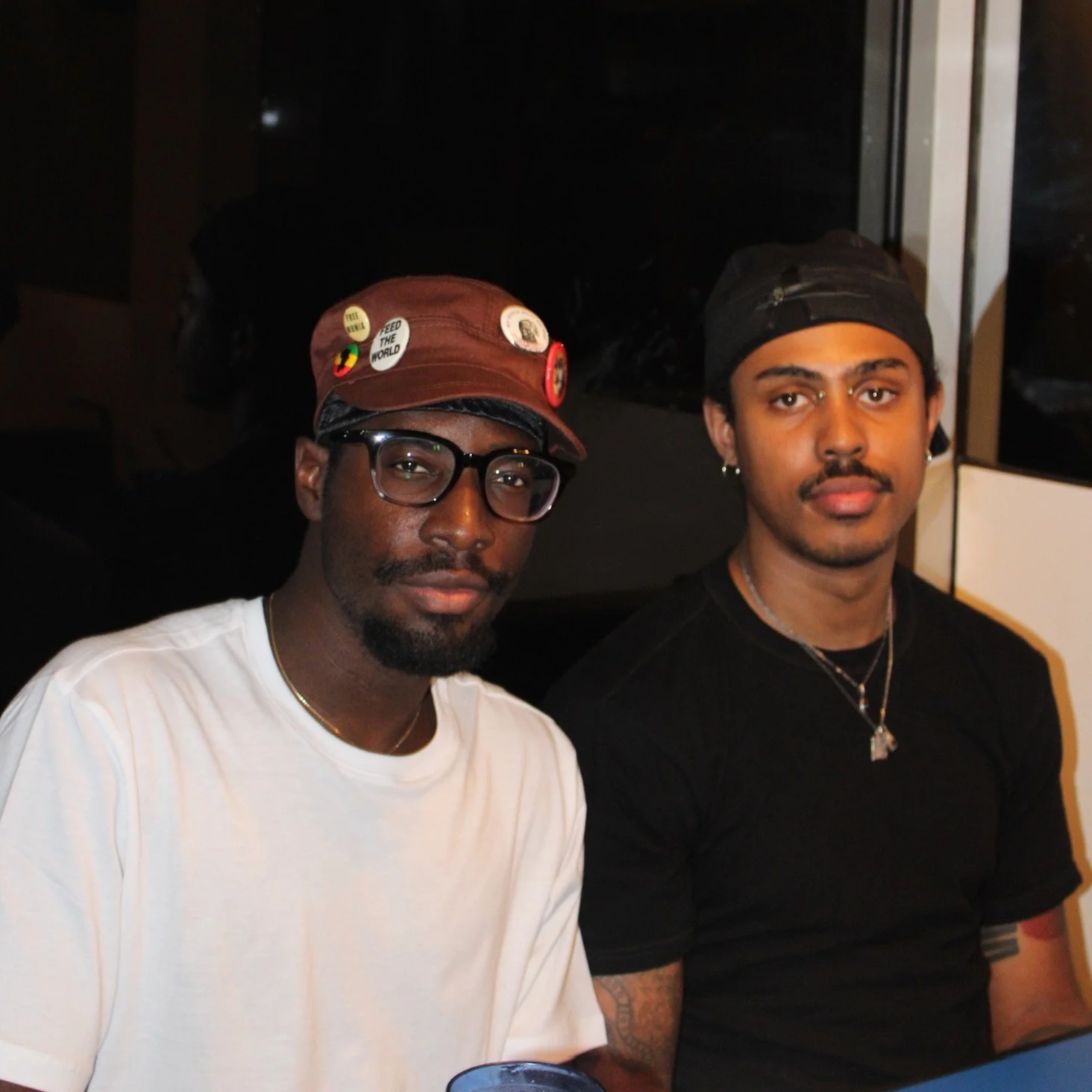
CHRIS: I’m Chris — @christherula on Instagram.
TREY: I’m Trey — @treysonn_ on Instagram, and we are Thrift to Death.
JINXX: What inspired Thrift to Death? Share the story behind the name and how your collective first came to life.
TREY: Basically, the story behind it—well, I’m gonna start off with the name Thrift to Death. At the time, in 2021, I was doing a lot of thrifting and reselling. So my Depop was originally called Thrift 2 Death. That’s where the name came from.
Chris and I went to college together — Manhattan College (well, Manhattan University now). We used to go thrifting a lot with our friends, especially at this store in the Bronx called Unique.
CHRIS: He made that shit hot. Like, he was literally one of the first people, I would say, on TikTok really doing the whole “come to my secret spot” thing. People just started pulling up, blowing up the spot. He really made that whole lane.
TREY: Me and Chris used to have conversations about creating this type of space because we knew a lot of friends who sold clothes — whether they were designing or reselling. And we were like, damn, we wish there was a space where all our friends could be together, hang out, and people could shop.
In 2021, I started working at this store called Slope Vintage in Park Slope, Brooklyn — a local vintage shop. This was right after COVID, and I was looking for a job — something within vintage because I was already so involved with TikTok, doing vintage highlights and things like that.
On the weekends, the streets were closed for the neighborhood — I guess it was like a COVID relief thing to help small businesses. I asked them, “Hey, can we do a pop-up on the weekends? We have a couple friends and other people who can come sell their clothes.” We pitched the idea, and they were with it. Then the conversation came — we were like, “Yo, what should we call this? It’s gotta be called something.”
CHRIS: Literally, I was like, bro, just use your name. Like, it’s fine.
JINXX: What’s one memorable moment from your markets that encapsulates what Thrift to Death is all about?
CHRIS: I would say that event we did at Urban Outfitters on Herald Square. We went into it knowing we were probably gonna get some shit like, “Oh, y’all working with a fast fashion brand, but y’all claim to be sustainable.” But our message behind it was that we’re taking our culture and what’s going on into this big, known space so that people who don’t really know about us can get to know who we are.
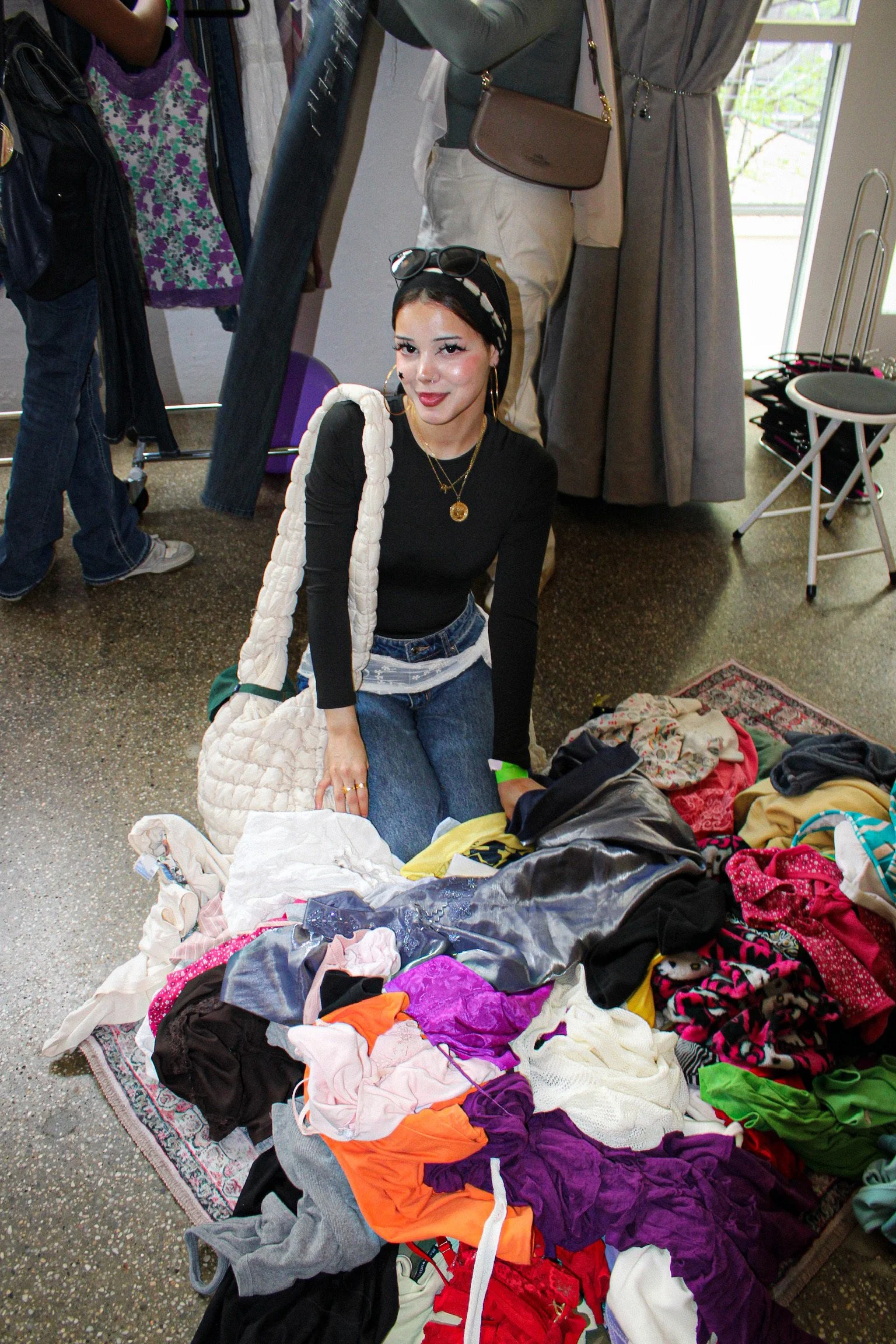
We literally took over. We had a line all the way down 34th. We held it in the Renewal Room of the store — it’s probably like 500 square feet. You know if you’ve been in there, that space is small. We had five different vendors, all with $10 piles. We did custom screen printing all day, and it got so big that by the end, there were about 200 people still in line who didn’t get inside.
That’s actually what made us start doing Early Bird tickets — we felt so bad. It gave us some things to learn, but it also showed us that we really have influence in the culture.
TREY: For me, one of the biggest things we did was our first pop-up event in Connecticut. That was huge — our first out-of-state event. That day was so crazy; we had over 1,000 people pop out.
JINXX: In Connecticut??
CHRIS: It’s on Yale’s campus, so we get the whole block to work with. We teamed up with one of our vendors, Mini PNG, got a permit, and just flooded the entire block.
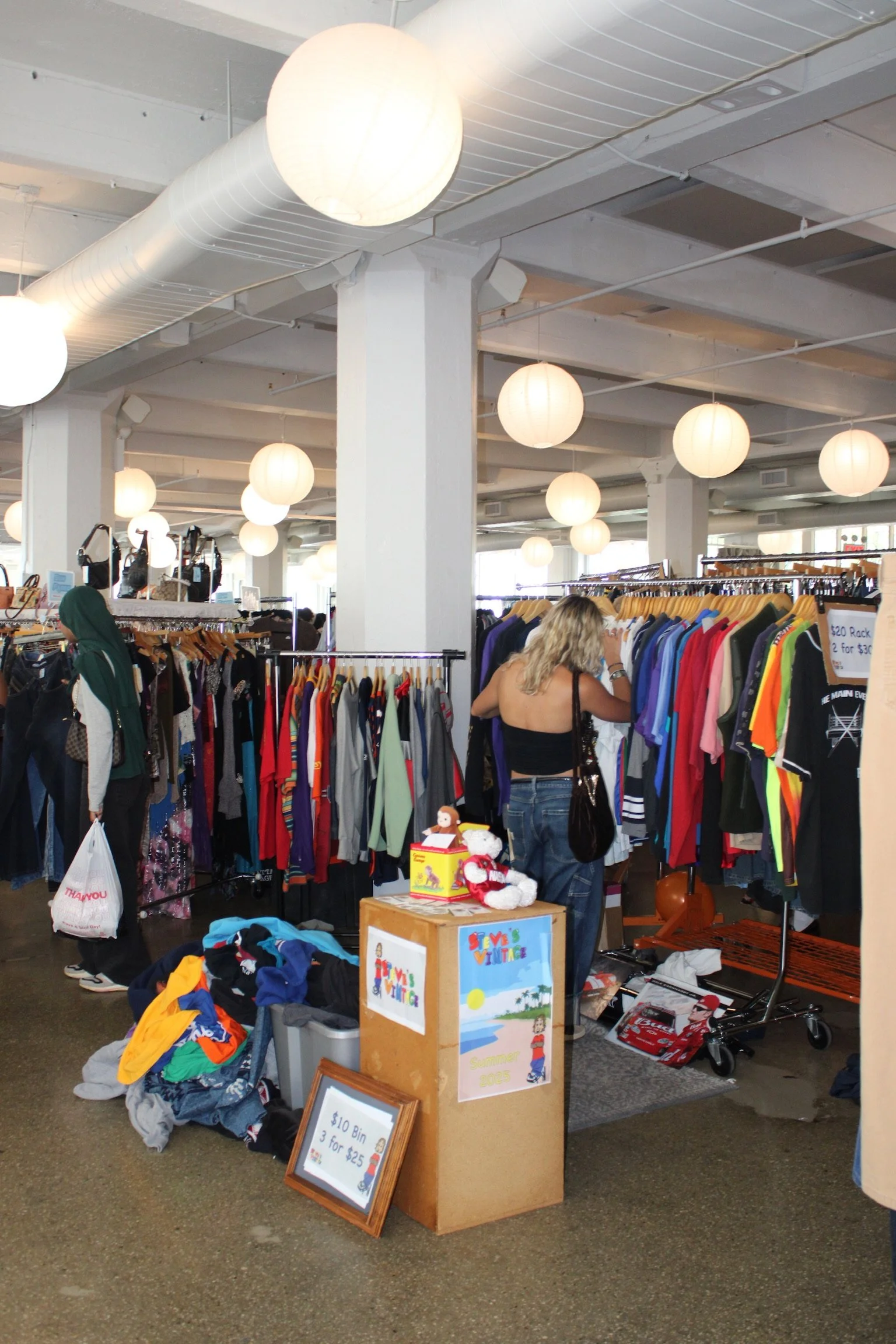
TREY: Our most recent one in Connecticut was probably our biggest yet — shoutout Mini PNG. We collaborated with her on that one, so the event was called Mini Thrift to Death Street Market. To me, that moment felt amazing. The amount of people that pulled up was insane — like, we can really build community in other states.
CHRIS: We’ve even gotten mentions to go outside the country. Obviously, that’s something to work toward in the future, but it’s wild because we started in New York — just on the block.
JINXX: Issue Four of our magazine explores public displays of affection. How do you see thrift culture as an expression of love — love for the environment, fashion, or your creativity?
CHRIS: As far as affection, we bring every type of person together — whether you’re POC, white, gay, straight, whatever. We create such an inclusive community where no one feels ashamed to be themselves. We even have families come through.
When we first started, we’d always come across people in Washington Square Park getting booked by the police or having their stuff stolen — which was another big reason why we wanted to create a safe space. A place where people can sell their stuff, talk about their business, and connect with other creatives.
TREY: It was created out of love — love for the community, love for our friends, thrifting, shopping, and just love for being together. There are people who tell me, “Oh my god, I met my best friend at a Thrift to Death,” or “I met my shorty there.”
CHRIS: And even people starting their own collectives after our events — and being successful with it now. Like, shoutout to FlyKids.
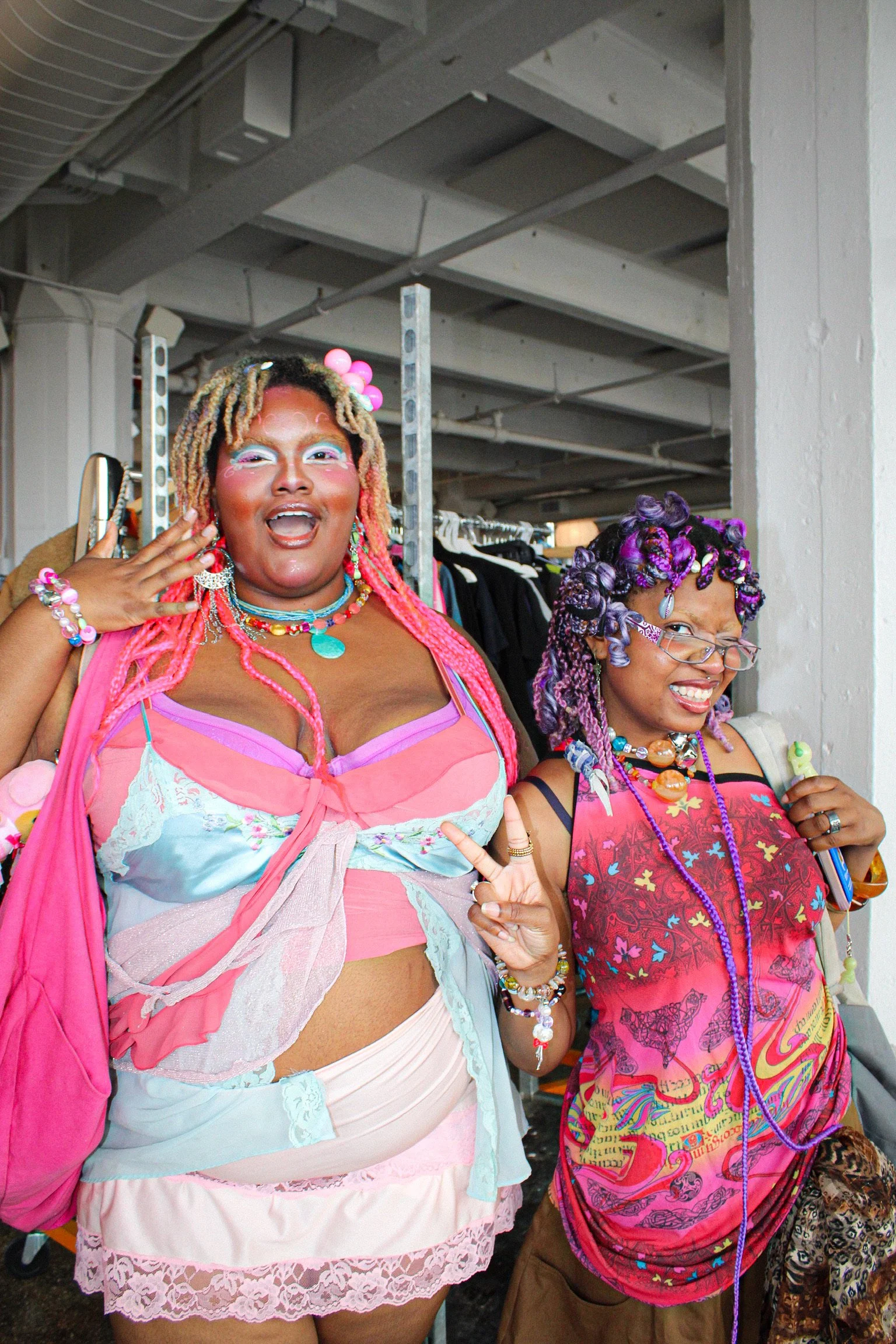
TREY: We just want to keep growing and building our communities, for real. We started in New York, and as we continue to grow here, we want to build more communities in different places — out of love. Love for clothes and for being together.
CHRIS: And to close it off, I just want to say this — if y’all start a business, a collective, anything — worry about the bread later. I swear to God, it’ll come.
When we started two years ago, we didn’t really make shit. Anything we did make, we just put right back into it. We didn’t see Thrift to Death become profitable until maybe last year.
“If you’re doing something just for the bread — stop doing it right now. Get a regular job. Especially in the creative space, if you tell people you’re only doing it for the money, it’s not gonna stick. It’s not gonna be a community — just a business. That’s why we’re a community first and a business second.”