
A CONVERSATION WITH KID CAROL
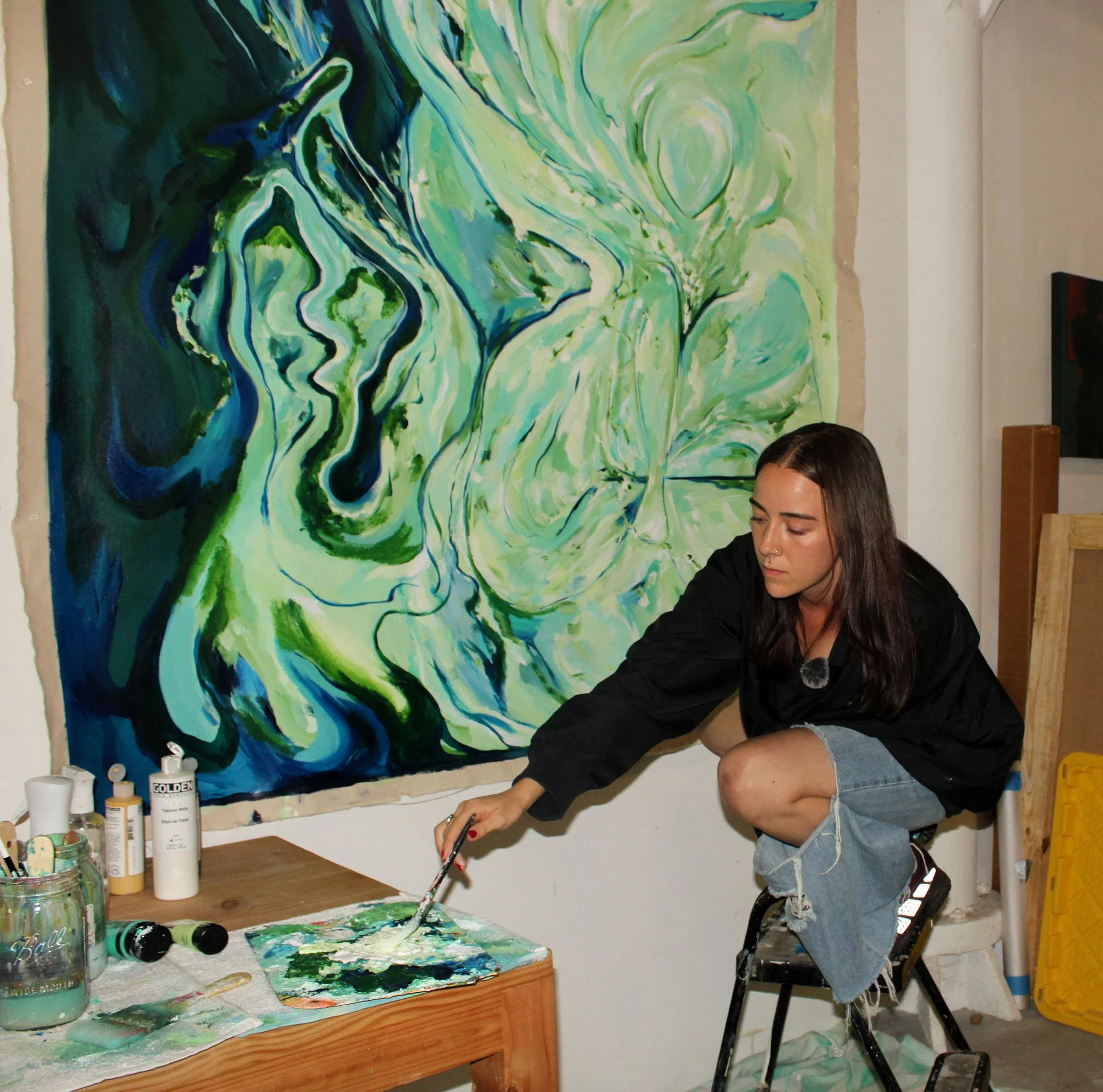
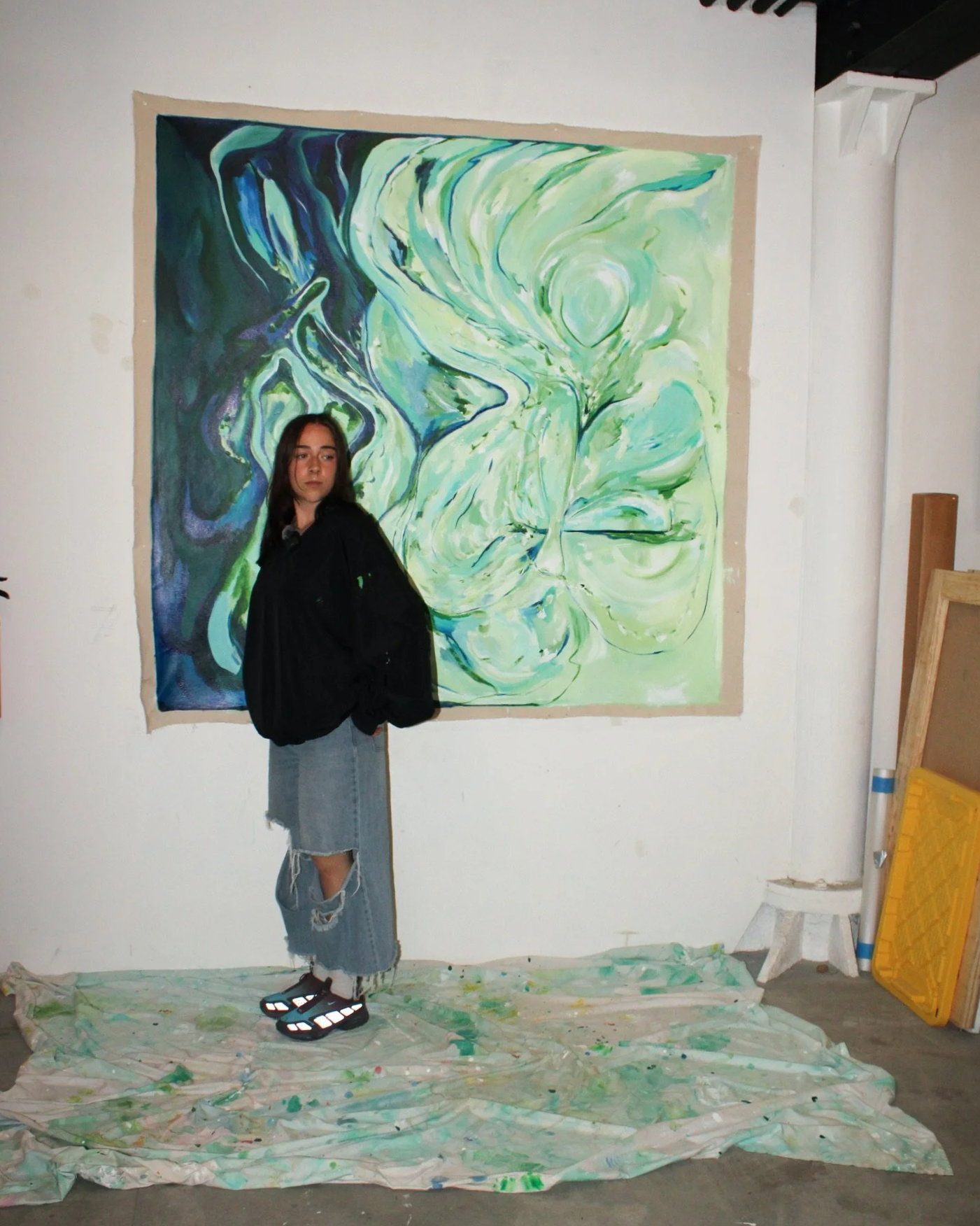
WE SAT DOWN WITH THE 24-YEAR-OLD NEW YORK-BASED ARTIST AS SHE WRAPPED UP HER FIRST PAINTING IN HER NEW STUDIO. SHE WALKED US THROUGH HER LAYERED, INTUITIVE PROCESS—GUIDED BY TEXTURE, LIGHT, AND INSTINCT. THIS LATEST WORK, SHE SAYS, MARKS THE START OF AN EXCITING NEW CHAPTER.
JINXX: We’re live. Okay — hi! Can you tell me your name?
KID CAROL: My name’s Carolyn. I go by Kid Carol, and I’m a 24-year-old visual artist located here in Brooklyn.
JINXX: Love that. This issue explores how senses can act as borders to memory. What sensory experiences most influence your practice — texture, sound, scent, etc.?
KID CAROL: I think the biggest sensory elements that inspire and drive my work come from touch and sound.
I’ll start with touch. A lot of my recent work is inspired by things like jumping into a cool body of water — which doesn’t happen that often when you live in New York — and by sensory moments like feeling the warmth of the sun on your skin or the coolness of the grass under your feet after a long day when you finally take your shoes off and literally touch grass.
I come from a really affectionate family, so touch has always been normalized for me — like massages and physical affection. I specifically think about a mother’s touch; my mom and I were really close, so moving away from my family was a big sacrifice. Those sensory elements are really present in my work — exploring natural and home-related themes.
Sound also plays a big part in my work. I don’t often create in silence. I’m almost always listening to music, whether it’s on a speaker or in my headphones at the studio. My music taste is all over the place. I even have specific playlists: one called I’m in the Studio and I’m Jamming — my upbeat, “Carolyn tunes” — and another called I’m in the Studio and I’m Yearning for my Sad Girl hours.
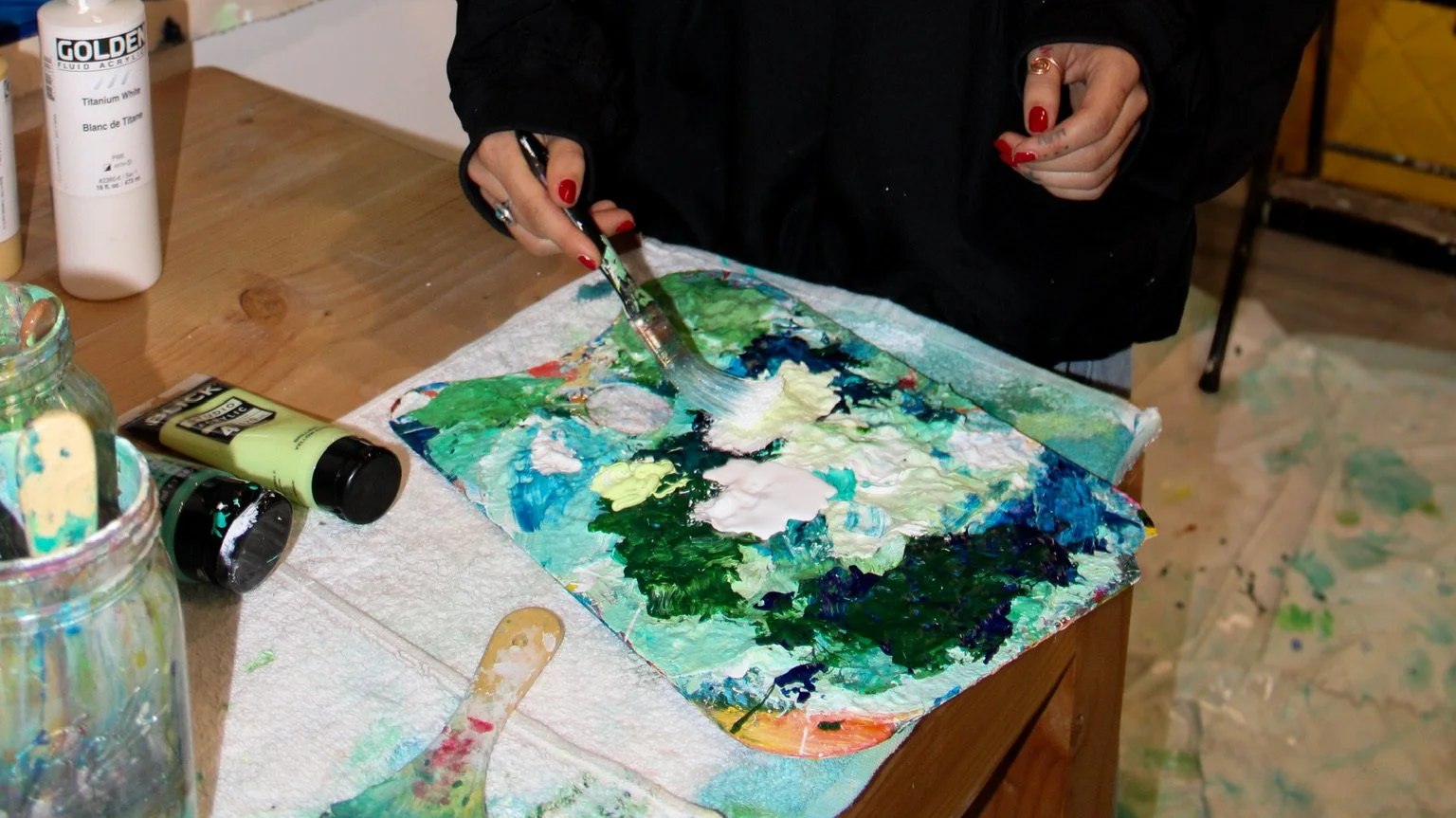
I also think about texture — especially clothing. Clothes are another part of my visual language. I joke that I dress like my paintings and my paintings look like how I dress. I wear a lot of greens and blues, and I’m big on comfort — cottons, linens, denims. Those textures make me feel grounded, which helps me paint comfortably.
JINXX: What role does art play in how you process transitions in your life?
KID CAROL: I love this question because my art is how I process transitions in my life.
When people ask what my art’s about, it’s about me — expressing whatever I’m going through in that moment without being too attached to the end result.
Sometimes I get an influx — or as I call it, an inflood — of thoughts and opinions on what I should be doing and how I should be doing it. Sometimes it comes from others, sometimes from myself, and it’s overwhelming. Art has always helped me process those transitions. It’s my safe space to be honest — whether it’s grief, heartbreak, fear, or joy.
Sometimes I don’t even understand the meaning of a painting until months later. I’ll look back and realize, Oh, that’s what I was going through. My work evolves as I evolve.
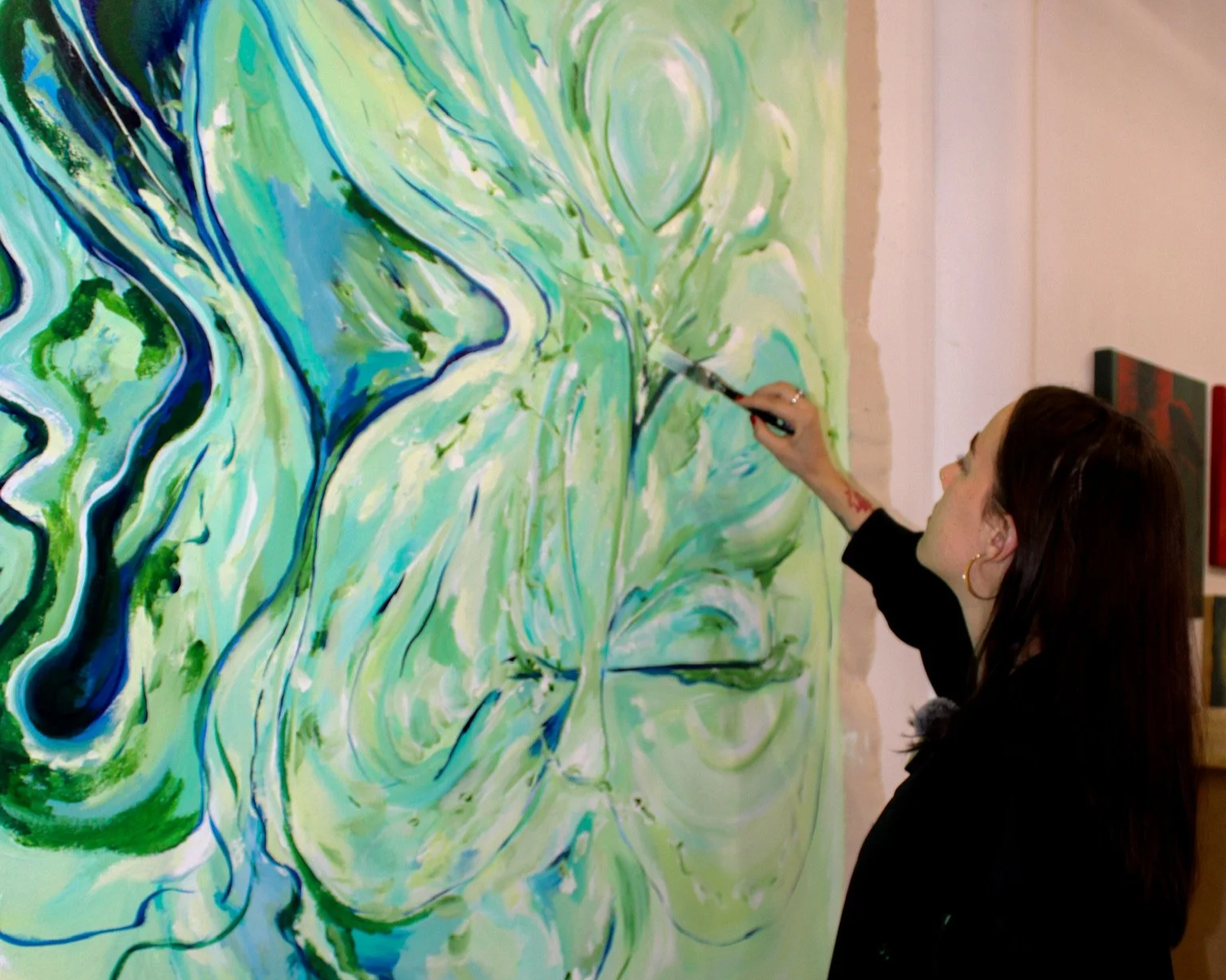
This painting behind me is a good example — I started it thinking about that “inflood” of information. But as it developed, it became about self-referral — about trusting myself as my own counselor. That’s something I’ve learned through painting: everything begins and ends with you.
JINXX: Is there a piece you’ve made that felt like a turning point emotionally or spiritually?
KID CAROL: Yes — last summer. I went through a period that really robbed me of my confidence. Around that time, I made a painting called Deeply Rooted.
It came from heartbreak, self-reflection, and learning where I needed to grow. I called it Deeply Rooted because it was about confronting those buried insecurities and fears. The painting itself is melancholy — an image of trees forming a tunnel, about finding comfort in solitude and in nature.
That piece was a turning point for me because it was the first time in months that I impressed myself. It was raw, emotional, and honest — and it helped me get my spark back. When I shared it, the response was beautiful. People connected deeply. It reminded me that honoring what I’m going through helps me reconnect with myself and with my audience.
JINXX: Your work feels both raw and intentional. How do you approach the balance between control and spontaneity?
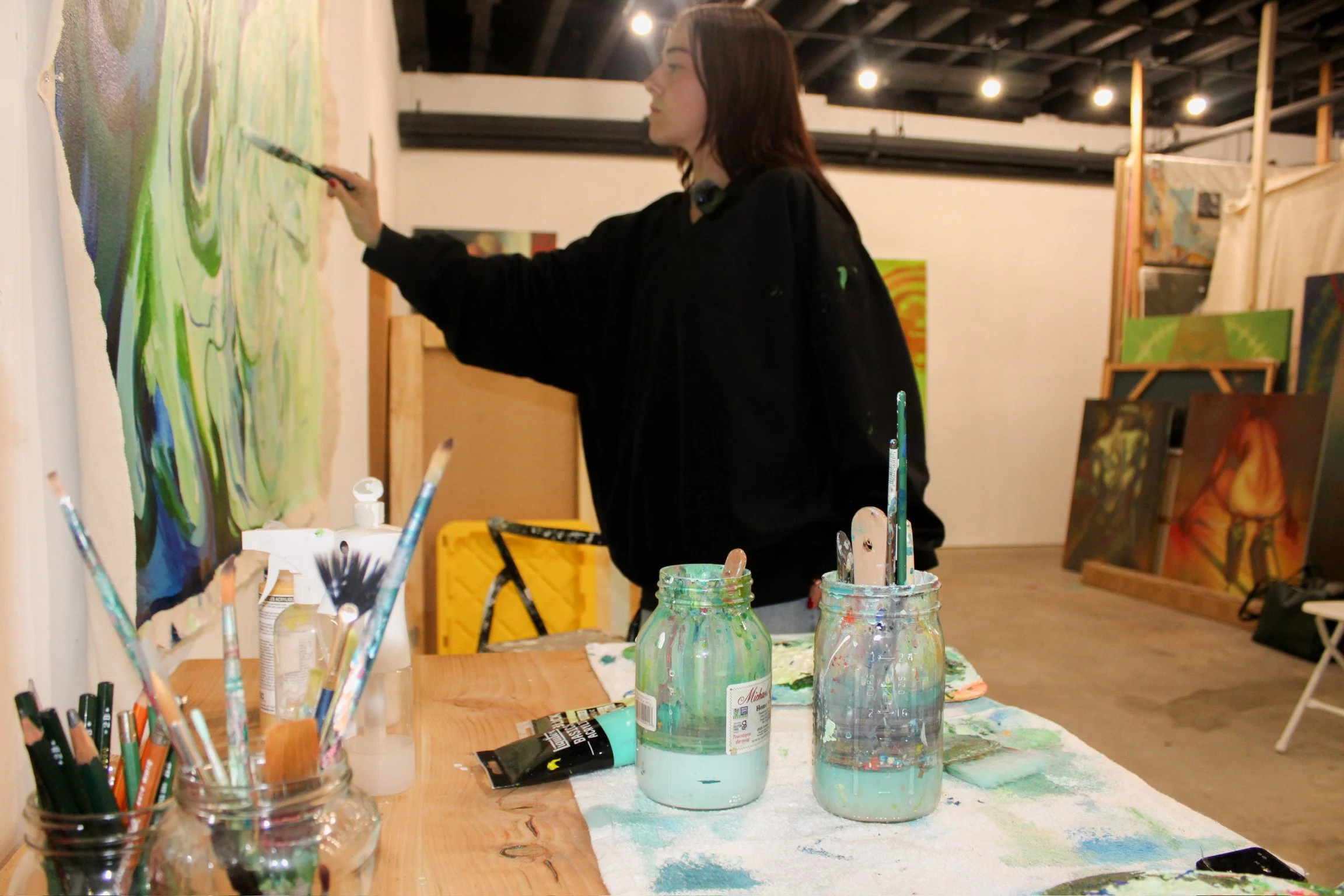
KID CAROL: When I start a project, the control is always in the colors. That’s my foundation. The spontaneity is everything else.
I used to get stuck in what my friend called analysis paralysis — overthinking every layer: Should I paint over this? Is this my best work? Eventually, I had to let that go. The beauty is in the spontaneity — channeling whatever I’m feeling in that moment.
The only truly controlled elements are my initial colors and maybe the theme, but they always evolve. That’s why my work feels raw — because most of it is unplanned. Maybe three of my last twenty paintings started with a clear image in mind. The rest grew as I grew.
Painting often is key. Even if I don’t feel inspired, I show up. I trust that curiosity more than perfection — that’s what breaks the paralysis.
JINXX: Is there an emotion or sensation you find yourself returning to again and again in your work?
KID CAROL: Definitely — safety and loss.
My art is my safe space, and exploring safety means being vulnerable enough to process experiences honestly. Loss shows up often too — not just sadness, but transformation. Some of my strongest works have come from loss — losing friends, confidence, even versions of myself.
Painting helps me reclaim that energy. Like, I may have lost something, but now I’ve created something that holds it forever.
One of my favorite pieces last year was called Safe Space. It came together in just a few days and felt like a full-circle moment. I was traveling solo, learning to create safety within myself.
I’ve learned that my journey only makes sense if I’m consulting myself. My process is mine alone — and painting reminds me that no matter what happens, I can always return to myself and my art.
JINXX: This issue connects to fleeting moments — that touch-and-go feeling before something slips away. How does that translate to your art?
KID CAROL: A lot of my work is about capturing emotions and moments so I can move on from them.
In line with the theme of touch and go, my work is about touching a memory, a feeling, or a transition — celebrating it so I can let it go. It’s about shining a light on what I’m experiencing, seeing it for what it is, and then moving forward — to the next painting, the next lesson, the next blessing.
My work honors fleeting emotions in a way that feels nostalgic but also freeing.